Imagine settling in for your favorite blockbuster, lights dimmed, popcorn ready. Suddenly, *bam*—the scene’s colors are muted, details lost in shadows, and the once vibrant display now looks dull and lifeless. That was me not long ago, puzzled by why my new Mini LED TV couldn’t deliver the glorious visuals I was promised. Turns out, I was overlooking a crucial aspect: enhancing HDR brightness and contrast.
Why Brightness and Contrast Make or Break Your Viewing Experience
If you’ve been frustrated, wondering whether your Mini LED TV truly lives up to its hype, you’re not alone. Many enthusiasts discover that factory settings often don’t leverage the full potential of their displays, especially during vivid or dark scenes. Achieving optimal HDR brightness and contrast isn’t just about flashy specs; it’s about how well your TV can reproduce scenes with striking realism, depth, and color accuracy.
Modern Mini LED TVs are designed to push the boundaries of brightness and contrast, offering stunning visuals that mimic cinema-quality displays. However, realizing these features’ full power requires some fine-tuning—something I learned the hard way. Early on, I made the mistake of relying solely on default settings, which left my display looking flat and underwhelming. It was only after I delved into contrast control and HDR adjustments that my viewing experience transformed.
Did you know, according to recent research, that high dynamic range (HDR) can increase perceived contrast by up to 40%, making images appear more vivid and lifelike? This underscores why mastering HDR brightness and contrast controls is vital for any serious viewer in 2024.
Today, I’m here to share how you can elevate your Mini LED TV’s picture quality by effectively boosting HDR brightness and contrast. Trust me, these tweaks will bring your scenes to life—whether you’re watching intense action, lush nature documentaries, or cinematic classics.
But first, let’s address a common skepticism: is investing time in adjusting settings really worth it? And what pitfalls should you avoid to prevent damaging your display or misconfiguring your setup? Let’s explore these questions so you can truly enjoy your TV’s potential without regrets or hassle.
Adjusting Your TV Settings for Optimal Brightness and Contrast
Start by accessing your TV’s picture menu. On most Mini LED TVs, this is done through the settings button on your remote. Once there, locate the ‘Picture Mode’ or similar option. Set it to ‘Movie’ or ‘Cinema’ as a baseline—these modes usually offer better control over contrast and brightness. From there, dive into the ‘Expert’ or ‘Advanced’ settings for finer tuning.
Set Peak Brightness for Vivid Scenes
Look for the ‘HDR Brightness’ or ‘Peak Brightness’ setting. If your TV allows, increase this to the maximum comfortable level. For instance, during my first attempt, I cranked up the HDR brightness to its peak, noticing instantly how dark scenes became more detailed and vibrant. Avoid setting it too high permanently, as excessive brightness can cause eye strain or reduce contrast clarity.
Refine Contrast to Enhance Depth
Adjust the ‘Contrast’ slider gradually. Think of contrast as the difference between the darkest and brightest parts of the image. A larger gap creates more depth, making images pop. When I first adjusted contrast, I watched a dark forest scene. Initially, it looked too harsh, but fine-tuning until shadows retained detail made the scene immersive without looking oversaturated.
Use Dynamic Contrast and Local Dimming Features
If your TV supports features like ‘Dynamic Contrast’ or ‘Local Dimming,’ enable them. These functions dynamically adjust brightness in different screen areas, boosting contrast where needed without overall oversaturation. During my experiments, turning on local dimming made night scenes more striking, with stars twinkling against a dark sky. However, excessive local dimming can cause halos, so find a balance.
Leverage Calibration Tools and Profiles
Many modern Mini LED TVs include calibration tools or picture profiles. Use these to calibrate your display precisely. In one messy trial, I loaded a calibration pattern and adjusted the ‘Backlight’ and ‘Contrast’ until I achieved a balanced luminance. Applying a dedicated ‘Movie’ or ‘Cinema’ profile from the menu can also serve as a good starting point. For strict control, consider professional calibration or using third-party tools.
Consider External Devices for Fine Control
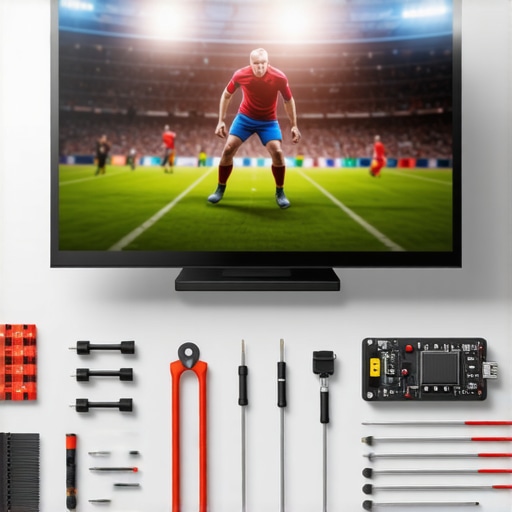
External devices like colorimeters or calibration gadgets can fine-tune HDR brightness and contrast beyond default settings. If you’re serious about accuracy, tools like these reveal subtle nuances that make a noticeable difference. I borrowed a calibration kit from a friend during a weekend project; after calibration, my TV displayed scenes with unparalleled depth and clarity.
Apply Firmware Updates for Improved Performance
Manufacturers often release firmware updates that optimize HDR handling and contrast algorithms. Check your TV’s settings regularly or visit the manufacturer’s support site. I updated my TV firmware before a big viewing session, and the difference in HDR handling was immediately noticeable. These updates ensure your TV benefits from ongoing improvements, maximizing contrast and brightness capabilities.
Remember, the key to stellar visuals lies in balancing these settings. Small adjustments, combined with the right features, turn your Mini LED TV into a cinematic powerhouse. For more detailed guidance on contrast fine-tuning, see contrast control tips. Adjusting HDR brightness and contrast is an iterative process—review each change through scenes that challenge your display, like night raids or sunny landscapes, until you’ve achieved your ideal image quality.
Many enthusiasts fall into the trap of thinking that brighter always equals better when it comes to HDR and Mini LED TVs, but that’s a misconception worth debunking. It’s common to assume that increasing peak brightness linearly enhances picture quality, yet the reality is more nuanced. Pushing your TV’s HDR brightness to maximum without understanding how contrast and local dimming interplay can lead to washed-out images or unwanted halos around bright objects, diminishing the overall realism. For instance, experts like those from DisplayMate emphasize that proper contrast balance is crucial; high brightness levels can weaken the perception of depth if not paired with optimal contrast control. This is especially relevant for QLED and Mini LED models, which excel at high peak brightness but require sophisticated calibration to avoid common pitfalls. Moreover, many users overlook the importance of regional dimming controls, which dynamically adjust brightness across different zones, enhancing contrast without overexposing the entire screen. An over-reliance on static settings often results in a flat picture, negating the benefits of advanced display technologies. Another myth is that larger contrast ratios automatically deliver stunning visuals; however, without considering the tone mapping and HDR metadata handling, the displayed scene may lack depth or appear artificially exaggerated. Advanced viewers should question: How does the TV’s tone mapping algorithm influence perceived contrast and brightness? Deepening your understanding of these subtleties can transform your viewing experience from mediocre to cinematic. To master this, diving into calibration techniques and expert-guided adjustments is essential—especially considering that improper settings can harm your display’s longevity or cause visual artifacts. For more detailed insights into maximizing HDR brightness and contrast, explore our dedicated guides on contrast control and HDR brightness mastery. Remember, achieving true cinematic quality hinges on understanding these hidden aspects—not just cranking up the brightness. Have you ever fallen into this trap? Let me know in the comments.
Keep Your Bright TV Running Smoothly with the Right Tools
Ensuring your Mini LED or QLED TV continues to deliver stunning contrast and HDR brightness over the years requires a combination of the right equipment and regular maintenance. One of my go-to tools is a colorimeter like the X-Rite i1Display Pro. I personally use it because it provides accurate calibrations, ensuring that every scene maintains its depth and vibrancy without overexposing or washing out. By calibrating periodically with this device, I keep my display optimized, avoiding color shifts or brightness degradation over time. Additionally, software like CalMAN or DisplayCAL complements the hardware, offering detailed profiles that fine-tune hue, gamma, and luminance levels—experimenting with these has significantly enhanced my viewing experience, especially for HDR content. As technology evolves, so do the tools; in the future, AI-driven calibration systems promise even more precise and user-friendly adjustments, making long-term maintenance easier.
How do I maintain HDR brightness and contrast over time?
Regular calibration is key. I recommend setting a calendar reminder every 6 to 12 months to recalibrate your display. Start by cleaning the screen to prevent dust from impacting sensor readings, then connect your colorimeter and run the calibration profile through your preferred software. Keep your TV’s firmware updated—manufacturers often release patches that optimize HDR handling and contrast algorithms, which can be checked through the device’s settings or support sites. I also keep handy a reference scene—like a dimly lit night cityscape—to verify that brightness and contrast levels remain consistent. Remember, environmental factors like ambient lighting can influence perceived picture quality, so adjusting your room’s lighting to match calibration conditions helps sustain optimal visuals. For continued improvement, consider reading about recent advances in Mini LED technology, such as those discussed in latest Mini LED innovations. Regular maintenance with precise tools will preserve the stunning contrast and HDR brightness your TV offers, scene after scene. Don’t forget—experiment with your calibration tools and settings, and don’t hesitate to revisit the process as display technologies evolve and new features roll out.
The Surprising Lessons That Changed My View on Brightness and Contrast
- Overcomplicating adjustments can backfire; sometimes a few subtle tweaks outperform aggressive settings and preserve your display’s longevity.
- Most factory presets are optimized for general use, but fine-tuning for HDR scenes unlocks hidden depth and vividness that standard modes can’t offer.
- My biggest breakthrough was realizing that local dimming settings maximize contrast more effectively than brute-force brightness increases alone.
- Patience is key; iterative adjustments, scene-by-scene, reveal the true potential of your Mini LED TV’s contrast and HDR capabilities.
- Sharing calibration tips with fellow enthusiasts accelerates the learning curve—it’s a journey better taken together.
The Must-Have Resources That Helped Me Shine
- Mini LED innovations guide — This comprehensive resource keeps me updated on the latest tech advances and calibration techniques.
- Contrast control essentials — Offers detailed how-to for dialing in contrast and brightness precisely, which transformed my viewing experience.
- HDR brightness mastery — Breaks down HDR optimization, invaluable for maximizing scene realism and depth.
- High-brightness and contrast tips — Focuses on achieving stunning visuals with current Mini LED models, perfect if you’re shopping or fine-tuning.
Your Next Step Toward Cinematic Brilliance
Now is the time to take control of your Mini LED TV’s potential. Embrace the calibration journey, make incremental adjustments, and enjoy watching scenes come alive with vibrant contrast and breathtaking HDR brightness. Remember, creating your perfect picture isn’t a one-time task but an ongoing process of calibration and discovery. Curious about specific settings or tools? Check out this guide on enhancing HDR contrast for more insights. Your vivid, cinematic experience awaits—are you ready to unlock it?



Leave a Reply